Retail leasing dips to 1.95 million sq ft in Q1 2026 amid supply constraints.
Retail leasing across India’s top cities declined in Q1 2026 due to a lack of new supply, even as demand remained steady.
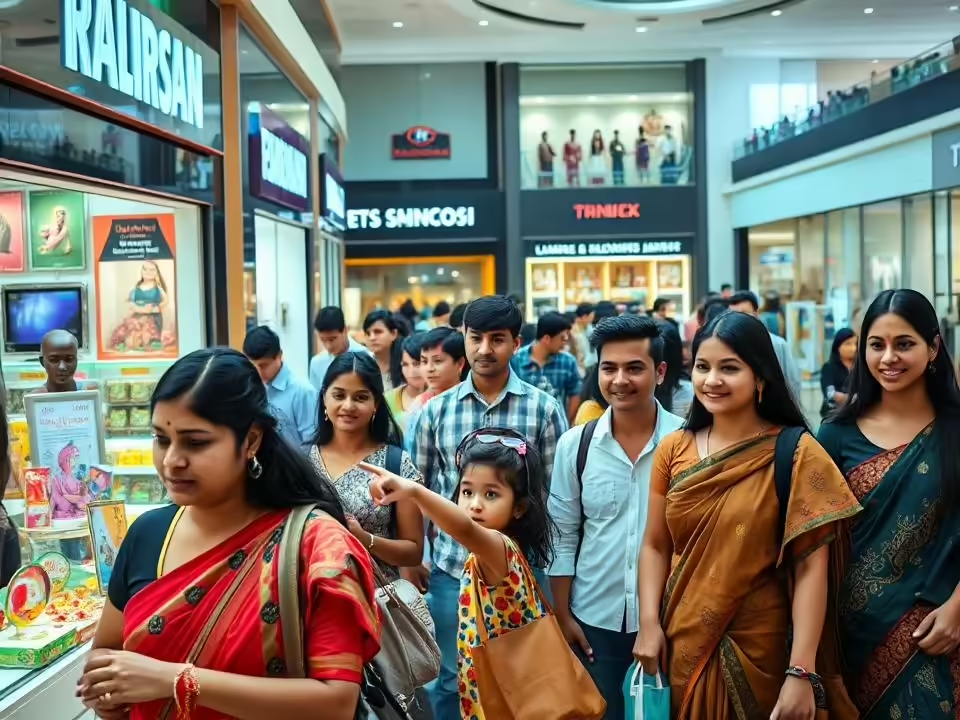
India’s retail real estate sector witnessed a moderation in leasing activity during the first quarter of 2026, as total leasing across the top eight cities stood at 1.95 million square feet. This decline comes despite continued strong demand from retailers, indicating that the slowdown is not demand-driven but primarily a result of supply-side constraints. The absence of new mall completions during the January–March period significantly impacted the availability of quality retail space, ultimately restricting overall leasing volumes.
On a comparative basis, leasing activity dropped 28 per cent quarter-on-quarter and 10 per cent year-on-year. This dip follows an exceptionally strong performance in 2025, when the sector recorded its highest leasing volumes in the post-pandemic period. The contrast highlights that while the current numbers appear subdued, the underlying market sentiment remains positive, with occupier interest continuing to stay intact across major cities.
A key trend emerging from the quarter is the growing preference for organised retail formats, particularly shopping malls. Mall leasing accounted for 47 per cent of total activity, a notable increase from 33 per cent during the same period last year. This shift reflects the evolving strategy of retailers who are increasingly prioritising high-quality, well-managed retail spaces that offer better footfall, visibility and customer experience. At the same time, high street locations continued to dominate overall leasing with a 53 per cent share, driven by demand for prime, high-visibility areas in dense urban markets.
From a geographical perspective, leasing activity remained concentrated in a few key markets. Delhi-NCR emerged as the leading region, accounting for approximately 30 per cent of total leasing during the quarter. Hyderabad followed with a 22 per cent share, while Mumbai contributed around 13 per cent. Together, these three cities represented nearly 65 per cent of the total leasing activity, reinforcing their position as primary demand drivers within India’s retail real estate landscape.
In terms of sectoral demand, fashion and food and beverage brands continued to dominate leasing activity, jointly contributing 46 per cent of total absorption. These segments remain central to retail growth due to their strong consumer demand and frequent expansion strategies. Meanwhile, entertainment and department store categories also played a significant role, accounting for 11 per cent and 10 per cent of leasing respectively, highlighting the increasing importance of experience-led retail in attracting footfall to physical spaces
Domestic retailers maintained a strong hold on the market, contributing nearly 87 per cent of the total leasing activity. However, international brands also showed increased participation, particularly in mall spaces, indicating a growing confidence in India’s organised retail ecosystem. This trend underscores the country’s appeal as a high-growth retail destination, supported by rising consumption and an expanding urban population.
Another defining feature of the current market is the tightening of vacancy levels across premium retail assets. Vacancy rates in Grade A malls stood at around 5.7 per cent, while premium Grade A+ assets recorded even lower vacancy levels of approximately 2.6 per cent. This scarcity of high-quality space has contributed to a slight increase in rentals, particularly in prime high street locations, where demand continues to outpace supply.
Industry experts emphasize that the current phase is characterized by a demand-led environment, where retailer interest exceeds the availability of suitable retail spaces. The decline in leasing volumes is therefore largely attributed to limited supply rather than any structural weakness in the market. As new retail developments are expected to be completed in the coming quarters, this supply-demand gap is likely to narrow, allowing leasing activity to regain momentum.
Looking ahead, the retail real estate sector is expected to witness a revival as fresh supply enters the market, particularly in the form of premium and organized retail developments. With a strong pipeline of upcoming projects and sustained demand from both domestic and global brands, the sector is poised for steady growth. The current dip, therefore, represents a temporary adjustment phase, reflecting the natural balance between supply and demand in an evolving and increasingly institutionalized retail landscape.
Quick Enquiry
Related News & Updates
.png)
.png)