Ghaziabad cuts body cuts property tax rates by up to 40%
In a major policy reversal, the Ghaziabad Municipal Corporation (GMC) has decided to reduce property tax rates by up to 40%, following widespread protests by residents and traders.
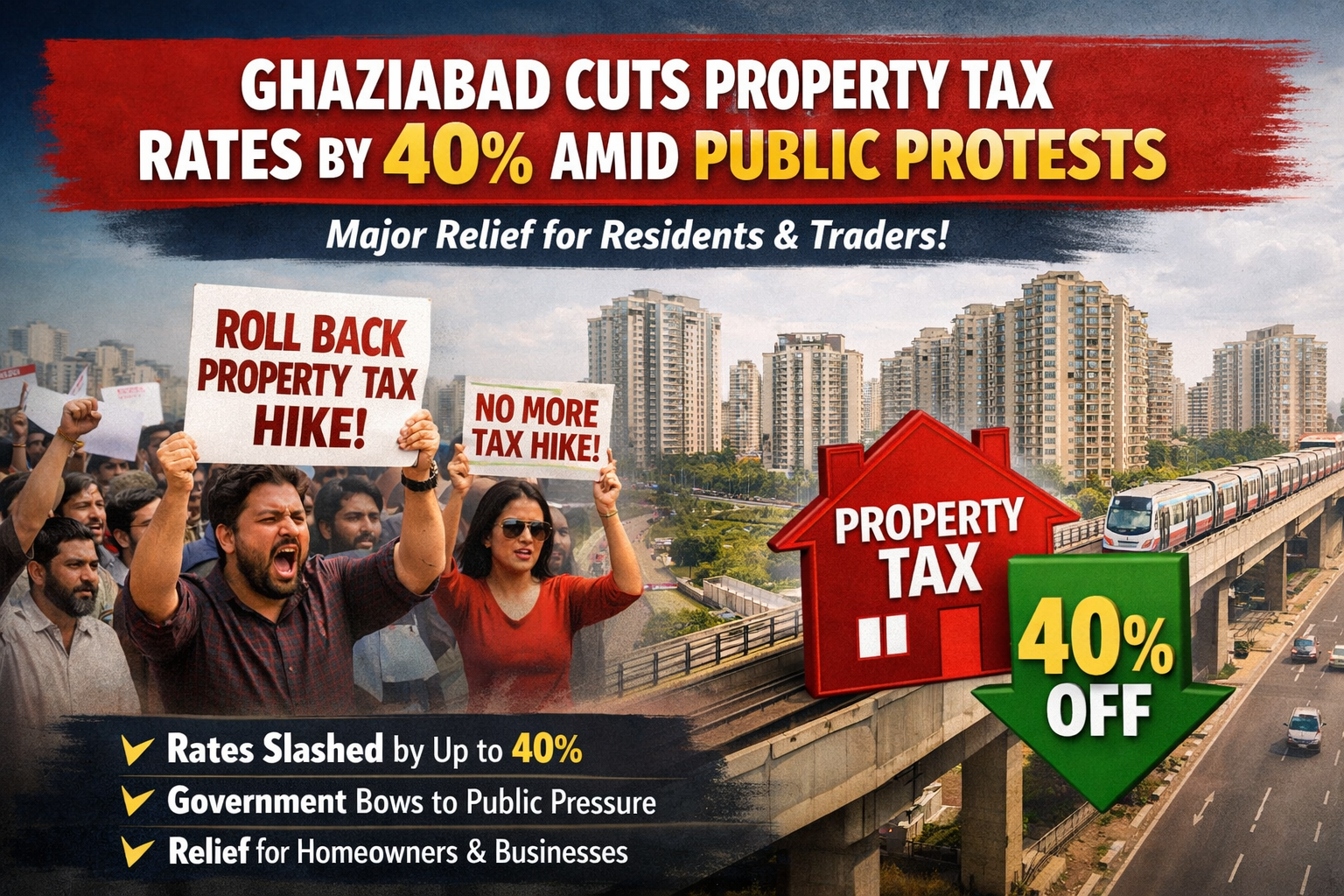
The move comes as a response to strong public backlash against the revised tax system introduced earlier.
Background of the Controversy
The issue began when GMC implemented a new method of calculating property tax based on unit area value linked to circle rates and rental value. This resulted in a sharp increase in tax bills, with many property owners reporting hikes of multiple times compared to previous years.
The sudden increase triggered:
- Protests across residential societies
- Opposition from Resident Welfare Associations (RWAs)
- Concerns raised by traders and commercial property owners
As pressure mounted, authorities were forced to reconsider the revised framework.
Government Intervention
Amid growing dissatisfaction, the Uttar Pradesh government stepped in and directed the civic body to review the tax structure. After multiple discussions and evaluations, GMC approved a significant rollback in rates to bring relief to citizens.
Key Changes Announced
1. Reduction in Property Tax Rates
- Property tax rates have been reduced by up to 40%
- The revised rates aim to correct the steep increase caused by the earlier formula
2. Simplified Tax Structure
The new system is designed to be:
- More transparent
- Easier to understand
- Fair across different property categories
3. Relief for Property Owners
The revised rates will directly reduce the financial burden on:
- Homeowners
- Shop owners
- Commercial property holders
Impact on Residents and Market
The decision is expected to bring immediate relief and restore confidence among property owners.
✔ Financial Relief
Lower tax rates will ease recurring expenses for households and businesses.
✔ Improved Compliance
With more reasonable rates, more people are likely to pay taxes on time.
✔ Positive Sentiment in Real Estate
The move could boost buyer confidence and encourage investment in the Ghaziabad real estate market.
What Happens Next?
Authorities are expected to:
- Implement the revised rates soon
- Adjust previously issued bills where applicable
- Ensure smoother execution of the updated tax system
Conclusion
The 40% property tax reduction in Ghaziabad highlights how public feedback can influence policy decisions. By addressing citizens’ concerns and revising the tax structure, the authorities have taken a step toward a more balanced and sustainable system.
For property owners, this decision offers not just financial relief but also renewed trust in the city’s governance.
Quick Enquiry
Related News & Updates
.png)
.png)