Infrastructure Push in the Budget Sets the Tone for Real Estate Growth Beyond Metros
The Union Budget 2026-27 has given infrastructure a pivotal role in economic growth, and this has created a conducive environment for the growth of the real estate sector.
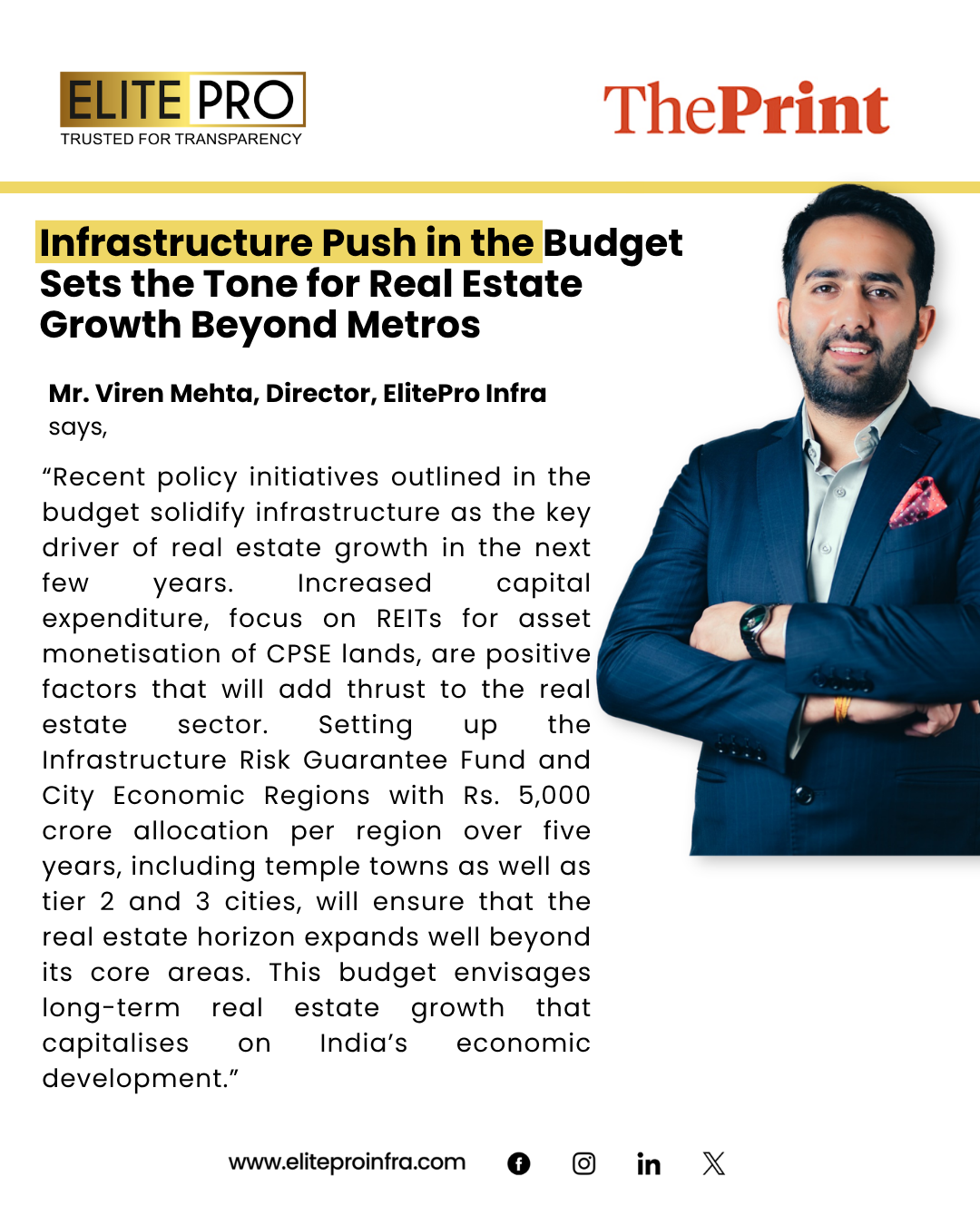
The Union Budget 2026-27 has given infrastructure a pivotal role in economic growth, and this has created a conducive environment for the growth of the real estate sector. The increased government spending on infrastructure, the renewed focus on future-ready infrastructure, and the efforts to develop Tier II and Tier III cities while setting aside a corpus of Rs. 5000 crores under City Economic Region plan for each city including temple towns, are an indication of the government’s intentions to develop growth hubs beyond the metros. For developers, this has created greater clarity on connectivity, urban development, and planned development, and has also helped to instill confidence in the residential and commercial sectors.
Viren Mehta, Founder & Director, ElitePro Infra, says, “Recent policy initiatives outlined in the budget solidify infrastructure as the key driver of real estate growth in the next few years. Increased capital expenditure, focus on REITs for asset monetisation of CPSE lands, are positive factors that will add thrust to the real estate sector. Setting up the Infrastructure Risk Guarantee Fund and City Economic Regions with Rs. 5,000 crore allocation per region over five years, including temple towns as well as tier 2 and 3 cities, will ensure that the real estate horizon expands well beyond its core areas. This budget envisages long-term real estate growth that capitalises on India’s economic development.”
The Budget’s infrastructure-centric approach has created greater certainty for real estate planning and investment. With growth expected to spread to smaller cities and new economic hubs, developers are looking at a more balanced and sustainable growth opportunity. The focus on decentralisation in urbanisation is expected to bring about a paradigm shift in demand and create new opportunities in emerging markets.
Related PR & Media

.png)
.png)
.png)
.png)
.png)