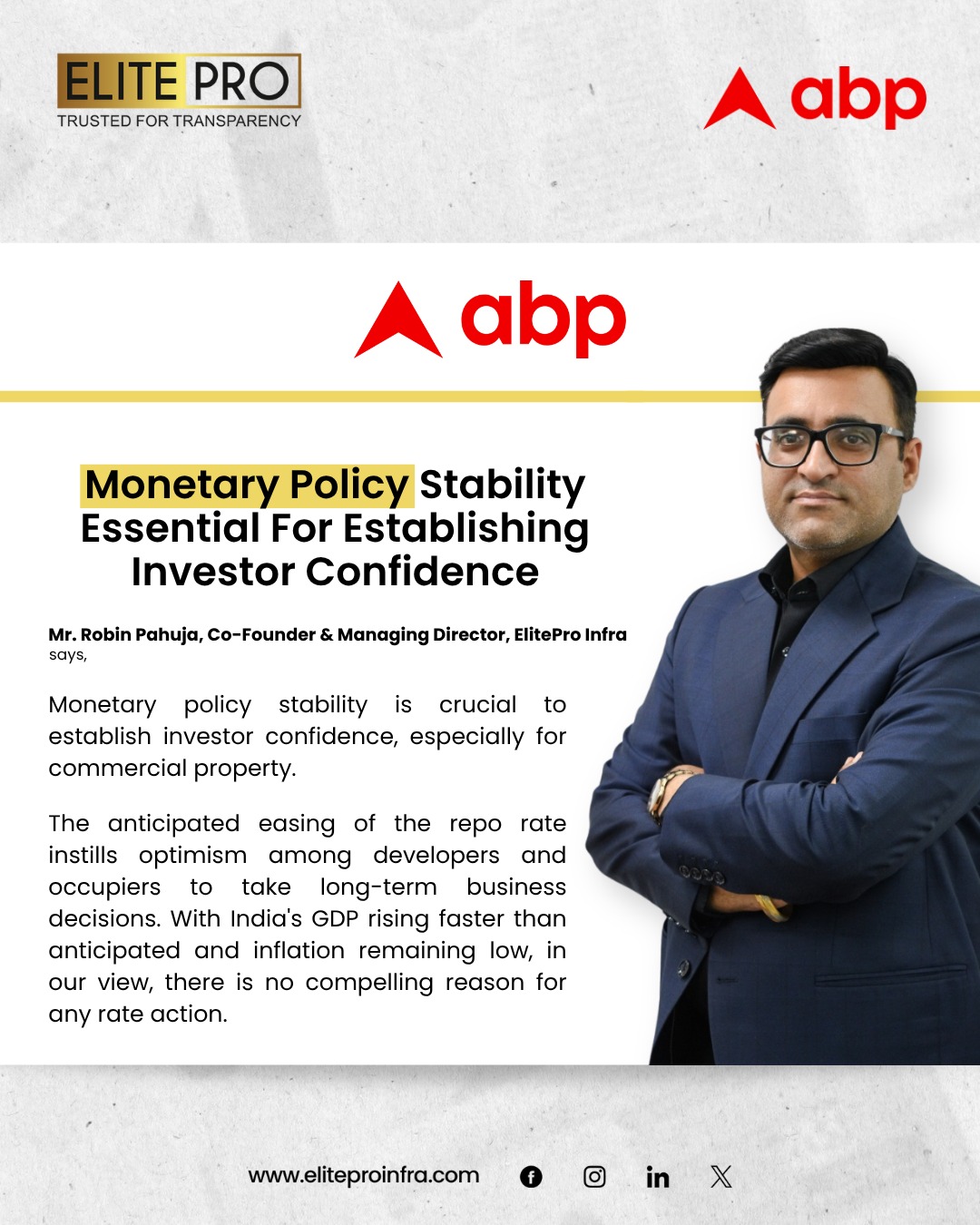
Monetary Policy Stability: Essential for Establishing Investor Confidence
In today’s evolving economic landscape, investor sentiment is deeply influenced by one critical factor—monetary policy stability.
Why Monetary Policy Stability Matters
Monetary policy, driven by central banks, directly impacts interest rates, liquidity, and overall economic growth. When policies remain stable and predictable, investors gain confidence in the market. This confidence encourages long-term capital allocation, particularly in high-value assets like commercial real estate.
Uncertainty in policy, on the other hand, can lead to hesitation, delayed investments, and reduced market activity.
Impact on Commercial Real Estate
Commercial real estate is highly sensitive to interest rate movements. Stable or easing monetary policies make borrowing more affordable, which:
- Encourages developers to initiate new projects
- Motivates businesses to expand operations
- Attracts both domestic and foreign investors
A stable environment ensures that stakeholders—from developers to occupiers—can make informed, long-term business decisions without the fear of sudden financial shifts.
Repo Rate Expectations and Market Sentiment
The anticipated easing of the repo rate has already started influencing market sentiment positively. Lower borrowing costs improve liquidity and make investments more attractive.
This optimism is clearly visible among:
- Real estate developers planning expansion
- Corporates looking to lease or purchase commercial spaces
- Investors seeking stable, long-term returns
India’s Economic Position: A Strong Foundation
India’s macroeconomic indicators further strengthen the case for monetary stability:
- GDP growth is outpacing expectations, signaling a strong economic recovery
- Inflation remains under control, reducing the urgency for aggressive rate hikes
- Business confidence is improving, supported by stable financial conditions
Given these factors, there appears to be no immediate need for drastic rate changes, reinforcing a stable investment environment.
The Way Forward for Investors
For investors, this is a strategic window of opportunity. A stable monetary policy environment means:
- Lower risk in long-term investments
- Better predictability of returns
- Stronger market fundamentals
Commercial real estate, in particular, stands to benefit as businesses continue to expand and demand for quality spaces rises.
Conclusion
Monetary policy stability is more than just an economic concept—it is the backbone of investor confidence. As India continues to demonstrate strong growth with controlled inflation, the outlook for commercial real estate remains highly promising.
For investors and developers alike, stability today translates into opportunity tomorrow.
Related PR & Media

.png)
.png)
.png)
.png)
.png)